✨ This article was AI edited. Editorial responsibility: Ivermectinfordogs.org.
Produced with AI. This article was artificially generated. Editorial responsibility: Ivermectinfordogs.org.
Where did ivermectin come from? Ivermectin originated from a single soil sample collected in 1974 by Japanese microbiologist Satoshi Ōmura near a golf course in Kawana, Ito City, Japan. The sample contained a novel actinomycete bacterium, Streptomyces avermitilis, which produced natural antiparasitic avermectins chemically optimized by William C. Campbell at Merck.
The Japanese Soil Sample: Dr. Satoshi Ōmura and the Kitasato Institute
The origin story of ivermectin is one of the most celebrated achievements in modern pharmaceutical microbiology and natural product chemistry. In the early 1970s, Dr. Satoshi Ōmura, a biochemist and natural products researcher at the Kitasato Institute in Tokyo, Japan, established a research partnership with the American pharmaceutical company Merck Sharp & Dohme (MSD). Dr. Ōmura’s specialized focus was isolating unexplored strains of soil-dwelling actinomycetes—filamentous bacteria renowned for producing biologically active secondary metabolites, including antibiotics and enzyme inhibitors.
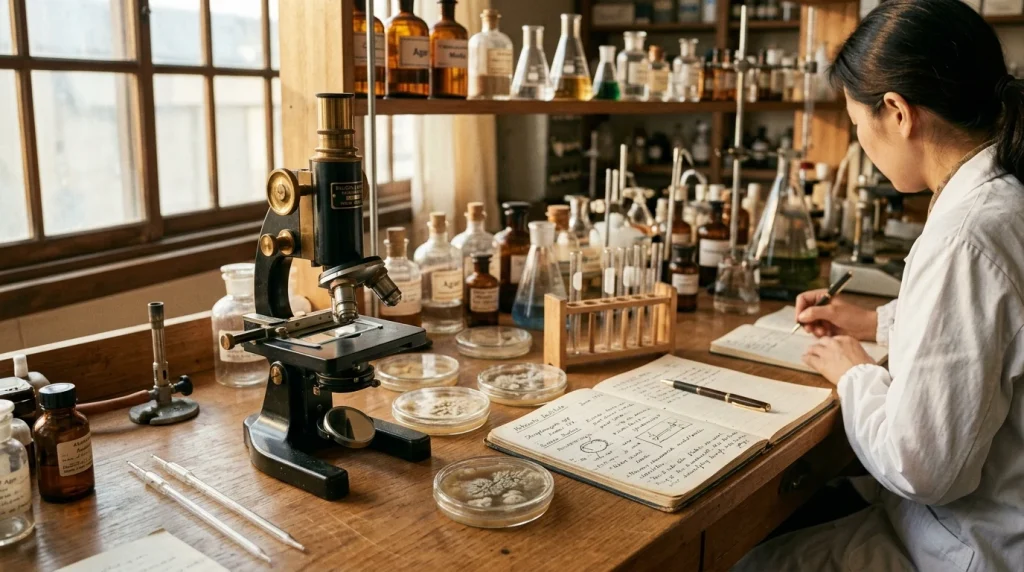
Dr. Ōmura developed an innovative screening protocol. Rather than testing soil microbes blindly for antibacterial properties, he collected thousands of soil samples from unique ecological niches across Japan, cultivated the microorganisms in specialized agar media, and selected strains exhibiting distinct morphological and biochemical profiles. In 1974, during a field collection trip along the coast of the Izu Peninsula in Shizuoka Prefecture, Dr. Ōmura collected a routine soil sample near the woodlands bordering the Kawana golf course in Ito City.
From this specific soil specimen, Dr. Ōmura isolated a previously unrecorded strain of actinomycete designated laboratory code OS-3838. Recognizing its unusual metabolic characteristics and lack of cytotoxicity against standard mammalian cell assays, Ōmura air-shipped live freeze-dried cultures of OS-3838 across the Pacific to Merck’s research headquarters in Rahway, New Jersey, for biological profiling.
The Merck Partnership: Dr. William C. Campbell’s Breakthrough In Vivo Screen
At Merck Research Laboratories in Rahway, the parasitic evaluation team was directed by Dr. William C. Campbell, an Irish-born parasitologist. Unlike conventional pharmaceutical screens that evaluated drug candidates against worms in artificial in vitro culture dishes, Dr. Campbell had pioneered a sensitive in vivo assay using laboratory mice infected with the gastrointestinal roundworm Nematospiroides dubius (now known as Heligmosomoides polygyrus).
When the fermentation broth derived from Ōmura’s OS-3838 culture was administered orally to infected mice in 1975, the results were astonishing. Dr. Campbell observed an unprecedented 100% clearance of internal nematodes with zero detectable toxicity or adverse reactions in the murine hosts. Campbell recognized that the broth contained a fundamentally new class of antiparasitic compounds possessing extraordinary potency at infinitesimal dosages.
The novel microorganism was subsequently taxonomically classified by Merck microbiologist Dr. Edward Kaczorowski and named Streptomyces avermitilis—the specific epithet combining the Latin prefix a- (without) and vermis (worm), literally translating to “the worm-clearing Streptomyces.” To this day, despite decades of exhaustive global soil sampling by international research groups, this exact high-yielding wild strain has never been recovered from any other location on Earth.
From Natural Avermectins to Semi-Synthetic Ivermectin
Following the biological discovery, a dedicated team of Merck natural product chemists led by Dr. Richard Burg isolated the active macrocyclic lactone molecules from the fermented broths. They determined that Streptomyces avermitilis produced a complex of eight closely related macrocyclic lactone homologs, which they designated avermectins (subdivided into A1a, A1b, A2a, A2b, B1a, B1b, B2a, and B2b based on specific structural variations).
| Compound Designation | C-5 Functional Group | C-22, C-23 Bond | Anthelmintic Activity Index |
|---|---|---|---|
| Avermectin A1 (a/b) | Methoxy (-OCH3) | Double Bond (-CH=CH-) | Moderate |
| Avermectin A2 (a/b) | Methoxy (-OCH3) | Single Bond with -OH at C-23 | Low to Moderate |
| Avermectin B1 (a/b) | Hydroxyl (-OH) | Double Bond (-CH=CH-) | Extremely High (Natural Baseline) |
| Avermectin B2 (a/b) | Hydroxyl (-OH) | Single Bond with -OH at C-23 | High |
| Ivermectin (22,23-dihydro B1) | Hydroxyl (-OH) | Saturated Single Bond (-CH2-CH2-) | Peak Potency & Enhanced Safety Margin |
While natural Avermectin B1 demonstrated breathtaking potency against parasites, it carried a slight risk of neurotoxicity in specific mammalian models due to its ability to cross cell membranes under certain conditions. Medicinal chemist Dr. John C. Chabala and his chemical synthesis group initiated a program of selective chemical modifications to enhance the compound’s therapeutic safety margin.
By employing a customized homogeneous Wilkinson’s catalyst (rhodium chloride triphenylphosphine), Chabala successfully achieved selective catalytic hydrogenation of the C-22, C-23 double bond in Avermectin B1 without altering the delicate macrocyclic lactone ring or the disaccharide sugar subunit. The resulting semi-synthetic derivative, designated 22,23-dihydroavermectin B1, was given the generic non-proprietary name ivermectin.
Pharmaceutically, commercial ivermectin is a standardized mixture of two homologous molecules:
- At least 80% 22,23-dihydroavermectin B1a (featuring a sec-butyl group at position 25).
- No more than 20% 22,23-dihydroavermectin B1b (featuring an isopropyl group at position 25).
Chronological Timeline of Ivermectin’s Origins and Milestones
| Year | Key Scientific Event | Principal Contributors | Impact / Milestone |
|---|---|---|---|
| 1973 | Kitasato-Merck International Collaboration Agreement signed | Dr. Satoshi Ōmura (Kitasato), Dr. Max Tishler (Merck) | Established cross-Pacific microbial natural product screening pipeline. |
| 1974 | Collection of soil sample OS-3838 near Kawana golf course, Ito City, Japan | Dr. Satoshi Ōmura & Kitasato field collection team | The single historic soil sample containing S. avermitilis is captured. |
| 1975 | Discovery of 100% worm clearance in murine in vivo screens | Dr. William C. Campbell (Merck Research Labs) | Identification of avermectin’s potent anthelmintic biological activity. |
| 1976 | Isolation and chemical structure elucidation of 8 avermectin homologs | Dr. Richard Burg, Dr. Thomas Albers-Schönberg | Characterization of the 16-membered macrocyclic lactone disaccharide architecture. |
| 1978 | Chemical synthesis of 22,23-dihydroavermectin B1 (ivermectin) | Dr. John C. Chabala, Dr. Michael Fisher | Creation of the semi-synthetic clinical molecule with optimized safety margins. |
| 1981 | Commercial launch for veterinary medicine (Eqvalan, Ivomec) | Merck Animal Health | Revolutionized global veterinary parasitology for cattle, horses, sheep, and swine. |
| 1987 | Launch of the Mectizan Donation Program for River Blindness | Dr. P. Roy Vagelos (Merck CEO), WHO | Merck committed to donate Mectizan free of charge for “as much as needed, for as long as needed.” |
| 2015 | Nobel Prize in Physiology or Medicine awarded | Dr. Satoshi Ōmura & Dr. William C. Campbell (jointly with Tu Youyou) | Recognized for discoveries concerning a novel therapy against infections caused by roundworm parasites. |
The Nobel Prize Recognition: Global Humanitarian Impact
The transformation of ivermectin from a veterinary livestock dewormer into one of the most vital human medicines in history occurred through Dr. William Campbell’s relentless scientific curiosity. In the late 1970s, realizing that ivermectin paralyzed microfilarial nematodes in horses without killing the adult worms abruptly (which often provoked fatal anaphylactic shock), Campbell proposed testing the drug against Onchocerca volvulus, the filarial parasite transmitted by blackflies that causes human onchocerciasis (river blindness) across sub-Saharan Africa and Central America.
Clinical trials conducted in Dakar, Senegal, by Dr. Mohamed Larivière in 1981 confirmed that a single annual oral dose of ivermectin (branded as Mectizan) eliminated millions of microfilariae from the human skin and eyes, halting the progression to permanent blindness and relieving agonizing cutaneous pruritus. In 1987, under the leadership of Merck CEO Dr. P. Roy Vagelos, Merck announced that it would manufacture and donate Mectizan free of charge to any endemic nation for as long as necessary to eradicate river blindness and lymphatic filariasis (elephantiasis).
To date, the Mectizan Donation Program has approved and delivered over 4.5 billion treatments globally, virtually eliminating river blindness from several Latin American nations and safeguarding hundreds of millions of lives across Africa. On December 10, 2015, the Nobel Assembly at Karolinska Institutet awarded the Nobel Prize in Physiology or Medicine jointly to Satoshi Ōmura and William C. Campbell in recognition of their paradigm-shifting discovery.
Frequently Asked Questions (FAQ)
Is ivermectin naturally occurring or synthetic?
Ivermectin is classified as a semi-synthetic derivative. The base molecule (avermectin B1) is produced naturally through the fermentation of the soil bacterium Streptomyces avermitilis. It is then chemically hydrogenated in a laboratory to saturate the C-22, C-23 bond, creating ivermectin (22,23-dihydroavermectin B1) with enhanced stability and safety.
What type of organism produces the avermectin compound?
Avermectins are produced by Streptomyces avermitilis, a species of Gram-positive, spore-forming actinomycete bacterium. Actinomycetes resemble microscopic fungi in their filamentous growth patterns but are true prokaryotic bacteria renowned for generating complex secondary metabolites.
Why was the Kawana golf course soil sample so unique?
Despite soil scientists analyzing hundreds of thousands of soil samples worldwide over the last fifty years, the specific wild strain of Streptomyces avermitilis capable of synthesizing high yields of commercial avermectins has never been discovered in any other location outside the single sample taken in Kawana, Ito City, Japan.
Who won the Nobel Prize for discovering ivermectin?
Japanese microbiologist Dr. Satoshi Ōmura (who isolated the bacterium from soil) and Irish-American parasitologist Dr. William C. Campbell (who discovered its antiparasitic properties at Merck) shared half of the 2015 Nobel Prize in Physiology or Medicine. The other half was awarded to Chinese pharmacologist Tu Youyou for her discovery of artemisinin against malaria.
Get our latest guides, news, and insights highlighted in your Google Search & AI Overviews.